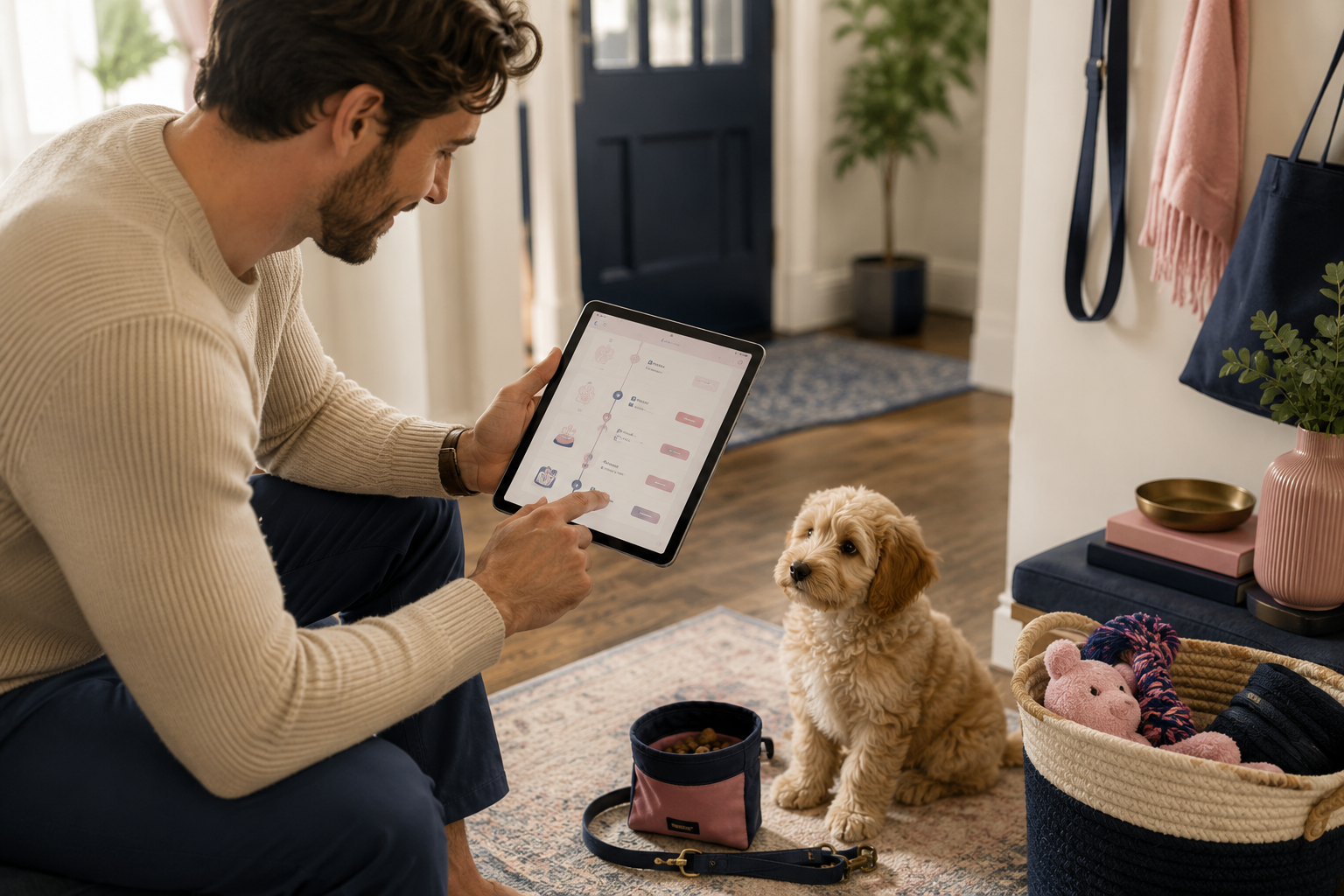
Training a dog at home can feel simple on Monday and impossible by Friday. The dog listens in the kitchen, then forgets everything outside. Family members use different words. Rewards appear too late. Frustration builds quickly. A dog training pack can make practice feel more organized. It gives owners a clearer path for daily repetition. Short sessions become easier to plan. Small wins become easier to notice. Training starts feeling less like pressure and more like teamwork.
Dogs learn well through repetition, timing, and clarity. Long sessions often create fatigue. Short sessions keep attention fresh. Five focused minutes can outperform thirty distracted minutes. A helpful positive dog training system encourages owners to practice often without overwhelming the dog. This supports better timing. It also helps families celebrate progress sooner. Calm repetition builds confidence on both sides. The dog understands expectations. The owner feels more capable.
Training moves faster when owners watch body language. A dog may seem stubborn when actually confused. Yawning, sniffing, turning away, or slowing down can signal stress. Excited dogs may need movement before focus. Nervous dogs may need distance before learning. Reading those signals protects trust. It also prevents unrealistic expectations. Owners can lower the difficulty at the right moment. This keeps sessions productive. Progress feels smoother when the dog feels safe.
Dogs struggle when every person teaches differently. One command should mean one behavior. One rule should stay consistent across rooms. A structured home obedience routine helps families agree before problems grow. It can define words, rewards, boundaries, and practice moments. Children can follow simpler steps. Adults can avoid mixed signals. The dog receives a clearer message. That clarity reduces frustration. Better rules make better manners possible.
Rewards do not always need to be treats. Praise, play, access, movement, and attention can motivate dogs differently. The right reward depends on the moment. A calm dog may enjoy affection. An energetic dog may love a quick game. A food-focused dog may work best with tiny snacks. Owners should test options carefully. Strong rewards make learning faster. Weak rewards make sessions feel confusing. Training improves when motivation matches the dog.
Setbacks happen in every training journey. A dog may regress during travel. Guests may trigger jumping again. Weather may interrupt walks. New smells may ruin focus outside. A practical well-mannered dog plan helps owners return to basics without panic. It reminds families that progress is rarely perfectly straight. Review can rebuild confidence. Easier environments can restore success. Then difficulty can increase again. Patience keeps training humane.
Training does not end after a dog learns the basics. Manners need maintenance. Sit, stay, recall, leash skills, and calm greetings all benefit from refreshers. Life keeps offering new distractions. Dogs also change with age. A flexible structure lets owners keep practicing without making training feel like a chore. Short sessions protect attention. Clear expectations protect trust. Regular review protects progress. Lifelong manners grow through ordinary days, not one perfect lesson.

Leave a comment